
A surprisingly light touch
We can start explaining CST by saying that it works on the system connecting the cranium to the sacrum (at the bottom of your back) which, through nerves, fascia and fluid, connects to everything else... but it quickly becomes so much more.
It works with the subtle rhythmic movement that originates from the fluid surrounding the brain and spinal cord. The gentle tension from the movement of this fluid affects the membranes (the 'meninges') that line the skull and spinal column. This rhythm reflects throughout the body and can be picked up by a practitioner's hands placed only lightly on the body. Anomalies in the rhythm help us assess, and show us areas where there may be restrictions and problems, which helps us know where to start and where to work.
With a surprisingly light touch our hands may work with fascia or fluid, they may work with energy or rhythm, they may work with structure or the more subtle parts of us that are only just beginning to be accepted by the medical world. We learn to listen profoundly to a client's body to know where to focus. This is, for me, the beautiful paradigm shift that this work takes us through. Once we learn to trust that the client's body knows best - and help empower our clients to know this too - then we can learn to let our hands follow what is asked of them.
Perhaps we are all like complicated tangled balls of wool, and to get untangled we may need a gentle pull here, a knot moved a bit there and the strands gently teased out of the tangles. This also means that CST may work in places that are not where the symptom is, and often other niggles clear up along the way. As a 'job' this keeps it really fun and interesting, as no two treatments are ever the same.
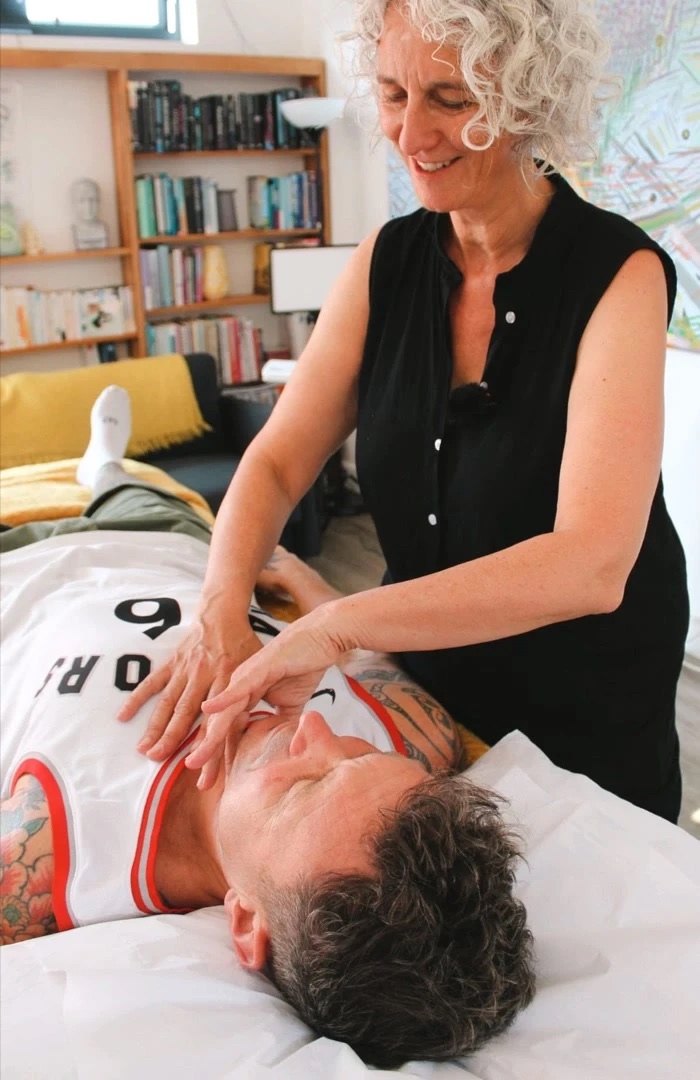
CranioSacral Therapy and SomatoEmotional Release: the importance of emotions.
CranioSacral as a therapy has evolved down a few different avenues, which can feel like very different approaches. My training path, developed by Dr John Upledger, arose after he spent 7 years researching the possibility of movement of the cranial bones, described by William Garner Sutherland, who developed cranial osteopathy. Upledger also noticed that emotion was often released as tissues released. This led him to expand his hands-on approach to include what he calls SomatoEmotional Release - a way of working with feelings, memories or emotional responses that may arise, while staying very in touch with the body tissues.
What is visceral manipulation?
Viscera = organs
Visceral Manipulation can involve treatment of any part of the body, but especially considers the internal organs, aiming to restore their natural movement and function. It was - and is continuing to be - developed by Jean-Pierre Barral, originally an osteopath, who wanted to understand more clearly the variety of restrictions and problems that could occur in the internal organs of the body and how they affect and are affected by the musculoskeletal system.
Earlier in his career, he found that a number of patients' apparent musculoskeletal symptoms were not responding to typical osteopathic intervention. Exploration and release of the restrictions around organs often helped improve the problems, while overall health and vitality also improved.
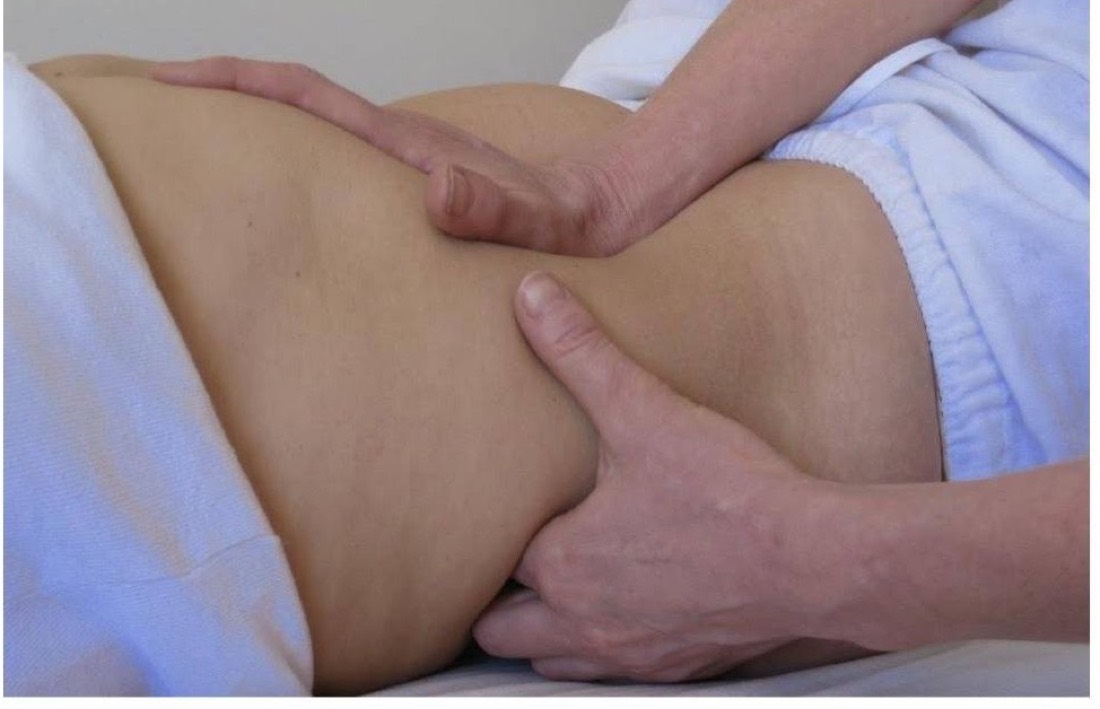
Visceral manipulation is a collection of specific and precise techniques that help restore the fluidity of the fascia and the proper mobility of organs, and thereby improve their function. Although some of these make a deep contact with the body, it is not invasive and rarely painful, although at times it may feel as if a practitioner's hands are reaching parts others may not have reached before!
This work is an amazing contribution to the field of bodywork, both in its precision and in the way the techniques are applied. The quality of listening and accuracy it inspires is a life-long training. Jean-Pierre himself says that when he hasn't had a good result for a patient it is usually because he needs to hone his anatomy!
In good health, the organs have their own physiological motion - that is they move. Each organ is surrounded by fascia, a type of connective tissue in the body that surrounds nearly all of our structures, small and large. Just as a tight sweater not sitting right round the shoulder could affect its comfort in the arm or torso, so the fascia restricted in one place may affect the fascia around another area.
Particular situations that can influence the organs and fascia include physical injuries, infections, operations and even emotional trauma. Recent traumas are usually faster to adapt and heal, but old injuries and compensations can also be relieved over a few sessions. It is especially helpful after operations, trauma or accidents, and when other issues just won't clear up.
So CST or VM?
A session isn't really either or but incorporates whatever your body most needs.